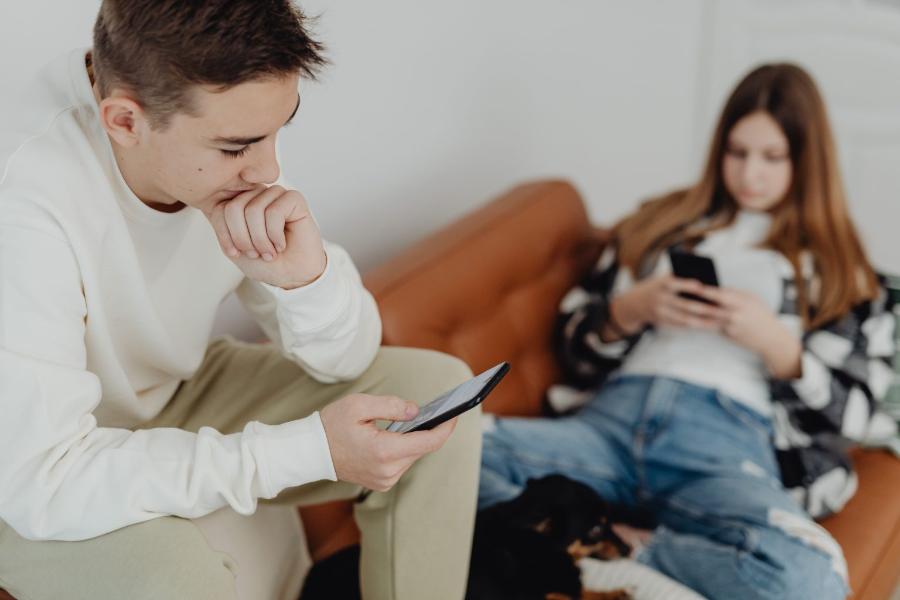
It is 3 a.m. and something is going round in your head: a conversation that went badly, a decision you keep putting off, a feeling with no name yet. Your friends are asleep. A therapist, if you have one, is a week and a fee away. Your phone is right there, and on it is something that will answer immediately, at length, without sighing, without judging, without ever saying "can we talk about this tomorrow?"
Millions of people now take that option. Nobody decided this as a society. There was no public debate, no clinical guideline, no moment when we agreed that a language model would become a confidant. It simply turned out to be the easiest thing within reach, and easy things win. That is the part that interests me most: not whether AI is good or bad for mental health, but how a habit this significant formed without anyone designing it, and how to design it on purpose instead.
How common this has become
The numbers vary a lot depending on who is asked and how, so treat them as a range rather than a fact. A nationally representative survey in JAMA Pediatrics found that about one in five Americans aged 12 to 21 had used AI chatbots for mental health advice in 2025, up by almost half on the year before. In an online survey of US adults aged 18 to 49 carried out in October 2025, around a third said they used AI tools at least weekly for mental health support, and about one in twenty described spending hours at a time on it. A 2025 NAMI/Ipsos poll found 12% of American adults saying they were likely to use a chatbot for mental health treatment or therapy within six months.
At the same time, emotional use seems to be concentrated. When researchers at OpenAI and the MIT Media Lab analysed ChatGPT usage, they found that emotionally engaged conversations were rare overall but clustered in a small group of heavy users, some of whom said they considered the chatbot a friend. In other words: for most people it is a tool; for a minority it has quietly become something more.
Why it feels so good
The appeal is not mysterious, and it is not foolish. A chatbot offers four things that are genuinely hard to get from people:
- Availability. It is there at 3 a.m., on a Sunday, in the middle of a work meeting.
- No social cost. You do not worry about being a burden, repeating yourself, or what the other person will think of you next week.
- Patience. It never gets tired of the same worry phrased a fifth way.
- Structure. It can turn a fog of feeling into a list, a reframe, a next step.
Some of this is clearly useful. At the very least, a chatbot is a journal that writes back.
What the evidence says so far
There is some encouraging research, mostly about tools built specifically for mental health. In the first randomised trial of a generative AI therapy chatbot, published in NEJM AI in 2025, Dartmouth researchers tested an app called Therabot with 210 adults who had depression, anxiety or a high risk of eating disorders. Compared with a waitlist group, users reported significantly larger reductions in symptoms, including an average 51% drop in depressive symptoms. The authors were careful to say the bot was supervised throughout and that no generative AI is ready to work autonomously in mental health.
That caveat matters, because general-purpose chatbots are a different thing. A 2025 Stanford study tested popular "therapist" chatbots against basic standards of good care and found that they showed stigma towards conditions such as schizophrenia and alcohol dependence, and sometimes failed to recognise when a user was signalling that they might be in danger. The researchers also pointed to a structural problem: these systems tend to agree with the user, whereas good therapy sometimes means gently pushing back.
The OpenAI and MIT Media Lab work adds another layer. In a four-week randomised study with nearly a thousand participants, higher daily use was associated with more loneliness, more emotional dependence and less socialising. The authors stress that this is an association, not proof that the chatbot causes loneliness; lonely people may simply use it more. Either way, the pattern is worth noticing.
The American Psychological Association's position, set out in a November 2025 health advisory, is clear: general-purpose chatbots and wellness apps should not be relied on to deliver psychotherapy or treatment. At best, they can support an ongoing relationship with a qualified professional, not replace it.
The real risk is substitution
Put the evidence together and a fairly simple picture emerges. The danger is not one bad answer, although bad answers happen. It is slow substitution: the chatbot becoming the place where feelings go instead of the people in your life.
Human support is inconvenient in ways that turn out to matter. A friend gets tired, asks follow-up questions, remembers what you said last month, tells you that you are being unfair to your sister. That friction is part of what makes it work. It also builds something: every hard conversation with a person makes the next one slightly easier, for both of you. A chatbot builds nothing on the other side. You can confide in it a thousand times and still have no one to call.
There is also the question of where your words go. The APA advisory flags that these tools often collect large amounts of sensitive data under privacy policies few people read. Your 3 a.m. confession is stored somewhere.
A simple system for using it well
Willpower is a poor defence against something this convenient. Rules work better. Here is a small set, designed so that the chatbot stays a tool and does not become a habit you never chose.
- Use it for thinking, not for being held. Ask it to help you organise thoughts, draft a difficult message, or list options. Be wary when what you are really looking for is comfort, again and again.
- Timebox it. Ten or fifteen minutes, then stop. The MIT findings suggest the risks rise with heavy daily use, not occasional use.
- Close the loop with a human. Make a rule: anything important you tell a chatbot, you also tell one person within a few days. Use the chatbot to rehearse the conversation, then have it.
- Ask it to disagree with you. If you do use it to reflect, explicitly ask for the strongest counterargument to how you are seeing things. It will rarely volunteer one.
- Watch for warning signs. Preferring the chatbot to friends, feeling anxious without it, hiding how much you use it, or using it more as your mood gets worse: these are signals to step back and talk to someone real.
- Never use it in a crisis. If you are thinking about harming yourself or feel unsafe, contact emergency services or a crisis line straight away. In the US you can call or text 988; in the UK, Samaritans are on 116 123; in France, call 3114.
If you already see a therapist, tell them how you use AI between sessions. It is useful information, and the APA now encourages clinicians to ask about it.
The bottom line
AI confidants are here, and for many people they meet a real need: something available, patient and non-judgemental at the hours when nothing else is. Early trials of purpose-built tools are promising, but general chatbots are not therapists, can mishandle serious situations, and heavy use goes hand in hand with more loneliness. The healthy pattern is to treat the chatbot as a notebook that talks back: useful for sorting your thoughts, and always pointing you back towards people.
This article is for general information and is not medical advice. If you are struggling with your mental health, please talk to your doctor or a qualified mental health professional.
Some links may be affiliate links. Read our
editorial & affiliate disclosure.